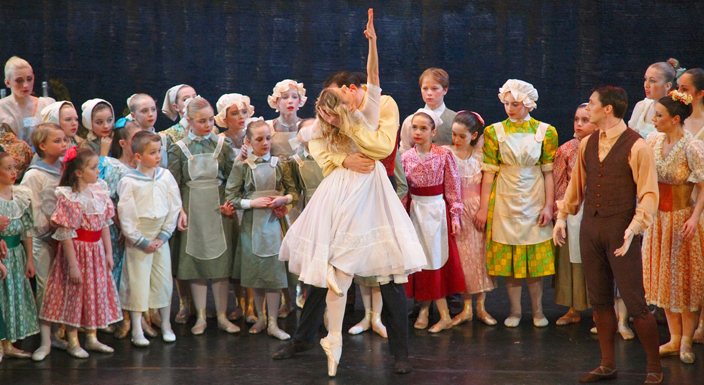
|
|
|
Hobbit finds journey hard going The Hobbit Wolverhampton Grand *** THE problem with bringing JRR Tolkien’s scene-setter for Lord of the Rings to the stage is that any stage is not really big enough. It is a small book but a long, epic journey which paints a broad canvas ready for the entrance of the classic trilogy. Somehow having the hard working cast of 13 scrambling up and down scenery for no apparent reason, heading off stage in one direction and coming in from another doesn’t really convince you they are travelling very far. To add to their problems, these days, there is the inevitable comparison with Peter Jackson’s £200 million Lord of the Rings films and when it comes to special effects . . . well this is more panto than Hollywood.. The giant spider is effective if only the collection of flying wires were not so obvious while the dragon is big but as we worked out pretty quickly that only his head moved the scariness dropped quite a few notches. The book is about goblins, trolls, elves and wolves and the like which saw a motley collection of ragged costumes and blokes running about in wolf heads which is heading towards "it's behind you" territory. FORMATION DANCING We even had what appeared to be the Davy Crockett formation dancing team with a ho-down from the woodsmen in Beorn's Hall. All it needed was Duelling Banjos and we could have been in Deliverance. Whether it was an attempt to cram the whole story in I don’t know but none of the characters were allowed to develop and two dimensional was as much as you got. Too often emotion was expressed merely by shouting. It was a struggle to care about what happened to any of the characters. The book is quirky and full of charm with gentle humour. That is all singularly missing from this adaptation but as the Vanessa Ford production is on its third tour in eleven years it can at least be credited with longevity. For anyone who has not read The Hobbit, or Lord of the Rings, following the story is probably a challenge and although with a cast of 13 playing all the characters in the book there has to be some doubling up but getting Gandalf (Christopher Robbie) and his Father Christmas white beard, to double up, with a strange accent, as The Master of Laketown must have confused a lot of youngsters in the audience. "Why is Gandalf pretending to be someone else dad? Is it a disguise?" Peter Howe made a fair fist of Bilbo but to be fair the script gave him little scope to develop the character and much the same could be said of Andrew Coppin’s Thorin Oakenshield while Christopher Llewellyn had the most difficult task as Gollum. EXCHANGE RIDDLES The film version with the voice of Andy Serkis is the definitive portrayal. Llewellyn made a fair fist of being his own stoor hobbit, Sméagol. The scene with Bilbo when Baggins has found the ring and the two exchange riddles inside the depths of a mountain is the only scene which manages any tension. Some of the special effects had a novelty of their own such as the rope thrown across the black stream in Mirkwood. Throw it off stage left and it miraculously appears swinging in from the flies stage centre. As mentioned earlier the giant spider was effective, if only they could disguise the flying wires better and the dragon was impressive at first sight. But once you realised only his head moved and there were no flames or smoke he wasn’t really that scary. The scenery though was inventive with two hulks which turned to provide cliffs, harbours, halls, caves, mountains – whatever the script called for. The story though was perhaps too much to cram in for the time, and even that was perhaps a tad long for little ones, so we are down to bare bones of narrative and characters who have no time or opportunity to develop. It opens with a stylised battle scene which is never explained and closes with Bilbo apparently suffering stomach cramps, again with little explanation. Curtain calls saw a return of the ho-down with most of the cast involved which had the audience clapping along happily enough. It seemed overlong, a bit of a plod but, that being said though, there were enough children talking excitedly about it in the interval and at the end to suggest they had enjoyed it and if it brings children to live theatre and fires their imagination to experience more then The Hobbit has done its job. It runs to 13-03-2010 and reappears in the Easter holidays at the Alex for a week’s run on March 30. Roger Clarke |
|
Memories and magic Beauty and Beast: Elisha Willis as Belle and Iain Mackay as the Beast. Photo: Roy Smiljanic 20 Years Celebration Birmingham Royal Ballet Birmingham Hippodrome ***** AUDACIOUS was how director David Bintley described Birmingham’s bid to entice the Saddler’s Wells Royal Ballet to the city and the same could apply to last night’s 20th anniversary celebration. Ballet and dance covering more than a century and two decades in Birmingham were condensed into two hours of magic and gratitude for what Birmingjham Royal Ballet have brought to the city. This was the BRB’s equivalent to the old Greatest Hits CD with 15 dances from ballets associated with the BRB as well as an overture for each half which showed off the talents of the Royal Ballet Sinfonia conducted by Philip Ellis and Paul Murphy. Linking the dances were interviews with the likes of Bintley, a sprightly Sir Peter Wright and news footage shown on large TV screens scattered around the hippodrome. Cleverest link of all was for the sexually charged pas the deux from Richard Rodgers Slaughter on Tenth Avenue with the introduction for the same piece on TV from the Royal Variety Show at the Hippodrome 1999. Amid the BRB’ s contribution was a pas de deux from Concerto by Shostakovich danced more than competently by Yasmin Naghdi and Sander Blommaert and Birthday Waltz danced by eight different years from Elmshurst School of Dance. SURE FOOTED Bintley told us that the BRB founder Dame Ninette de Valois had told him one should always have one foot in the past and one foot in the future and on last night’s showing the future seems reassuringly sure footed. Also included in the programme were seven dancers from the Ballet Hoo! project, the pro-am version of Romeo and Juliet performed in 2006 which brought a hundred or so youngsters from diverse backgrounds together with the help of youth and social workers to learn discipline through ballet – a medium many of them had never seen and knew nothing about. The evening though was about the BRB and a 20th birthday party which opened with a stunning Orpheus Suite in stark black and white followed by the Grand pas de deux from The Nutcracker (Gaylene Cummerfield, Iain Mackay) – the BRB’s first thank you to Brum twenty years ago. The Balcony pas the deux from Romeo and Juliet (Nao Sakuma, Chi Cao) was another highlight as was the Act 1 pas de deux from Beauty and the Beast (Elisha Willis, Iain Mackay) and the excerpt from Carmina burana with Robert Parker, (seen right) Carol-Anne Millar and Joseph Caley Highlight of the evening was the haunting reconciliation pas de deux from The Two Pigeons (Natasha Oughtred, Joseph Caley) choreographed by the founder choreographer Sir Frederick Ashton complete with two live white pigeons who deserved a bow of their own. Amid the beauty though was humour with Michael O’Hare back for Will Mossop’s stag night in Hobson’s Choice and a peg-legged pirate doing some quite amazing things swinging a leg in Sylvia and the dance expression of the bane of modern office life – printer jam (Kristen McGarrity, Joseph Caley). VARIETY AND VITALITY The evening ended with a pas de deux from Aladdin followed by the Polonaise from George Balanchine’s 1947 ballet Theme and Variations based on Tchaikovsky’s Suite No. 3 for Orchestra in G major, Op. 55. (No Sakuma, Chi Cao). The audience had been treated to plenty of variety from Duke Ellington to Tchaikovsky, modern dance to classical ballet which encapsulated all the variety and vitality BRB has brought to the city over the past two decades. These were party pieces with nothing cutting edge and no time to develop anything beyond what was almost a medley of their achievements. Solid and safe but this was really all about celebration though and it would be churlish not to give them five stars on their birthday. There was a chance to see the celebration again the following afternoon and on the evening of March 10 the ballet lived up to its royal tag when the BRB President Prince Charles attended the celebrations. Sadly his wife Camilla, the Duchess of Cornwall and patron of the Elmshurst School of Dance, was unable to attend because of a back problem review date 09-3-2010 Roger Clarke And de deux . . .
THIS was a celebration fit to put before a king, and the country's next monarch, Prince Charles, was there to see it on Wednesday night.
President of the BRB, the Prince of Wales has praised the
company's achievements since relocating from London's Sadler's Wells
Theatre in 1990, and the three gala performances underlined what a coup
the switch was for the Midlands.
First under the leadership of the legendary Sir Peter Wright and
now guided by brilliant choreographer David Bintley, the world renowned
Birmingham Royal Ballet is the jewel in the crown of Birmingham, and the
city leaders deserve praise for their vision in attracting the company
to this region. The special celebration included exerpts from the great classics performed in a double decade of delightful dance as well as some of the special works created by the company.
The Grand pas de deux from The Nutcracker, pieces from Carmina
Burana, Hobson's Choice, Romeo and Juliet, Beauty and the Beast and the
amazing The Two Pigeons were all there in breathtaking splendour, and
the sexiest ballet dance you will ever see - the pas de deux from
Slaughter on Tenth Avenue.
A glorious piece of humorous dance, too, came with the
pirates from Sylvia, including a pistol-packing pirate king performing
brilliantly with a wooden peg leg!
Huge TV screens were used for occasional interviews with Sir
Peter and Bintley, tracing the move from London and some of the world
tours by the ballet as well as showing the work done with under
privileged children at home and abroad.
Two hours of ballet bliss.
Paul Marston
|
|
Secret revealed of why old Adolf never stood a chance TEA AND EMPATHY: Dominic Gerrard, William Findley, Sholto Morgan and David Morley Adolf Hitler: My Part in his Downfall Birmingham Rep **** SPIKE Milligan’s part in the defeat of Nazi Germany might have been small but was vital, as vital as all the gunners, sappers, squaddies and the rest who made up the numbers. This stage adaptation of Milligan’s war memoirs by Ben Power and director Tim Carroll captures the absurdity of Spike’s humour and a little of the futility of war.
It benefits from an enthusiastic cast who do all their own scene
shifting and prove themselves to be fine musicians – Milligan was a jazz
trumpeter in another life – linking sketches and anecdotes with some
good jazz with a Glenn Miller medley, Pennies from Heaven and
Ain’t Misbehavin’ and a host of wartime tunes Sholto Morgan, in his professional stage debut showed not only some fine trumpet playing but a fine sense of timing for comedy and manic manner as the young Milligan which promises a successful career ahead of him. Star of the show though was somewhat more experienced Matt Devereaux as the CO and bumbling MC for the show, Major Chaterjack , who in real life actually had an M.C. – Military Cross. Devereaux was showed he was a mean sax and clarinet player. William Findley as Goldsmith, David Morley Hale as Kidgell (seen here watering Milligan who is guarding a hole for King and country) and Dominic Gerrard as Edgington made up the rest of Battery D of the 56th Heavy Regiment, Royal Artillery. Edgington, the pianist in the Battery D Quartet band, formed by him and Milligan,was a special friend, known by Spike as Edg Ying-Tong – inspiration later for the Ying Tong Song. Edginton wrote the words – 67 years ago -for the brilliant Tommy Trinder Song in the show. The full memoirs are a trilogy, probably the only trilogy ever written of seven volumes – remember this is Milligan - and Adolf Hitler was the first. The stage play is a sort of cross between M.A.S.H., Oh, What a Lovely War and a student review. Much had to be left out otherwise the audience would have to bring sandwiches and a sleeping bag and trying to extract a coherent narrative from Milligan’s rambling, surreal style, was a big ask. If you had to explain what the what the books were about you would have the choice of “the war” or “you really need to read them”. There is not much ground in between. So translate them for the stage and the result is a series of sketches, monologues and snapshots scratching the surface of 1943 mixed with songs and guest appearances by Hitler and Goebbels speaking through those 1940’s seaside affairs for holiday snaps with holes for faces. It is not rolling about in the aisles, holding your sides funny but there is plenty of humour which gives a taste of Milligan’s somewhat individual take on life and the seeds of what was to become The Goon Show. There is also a nice tribute to Buster Keaton at the end of each act and a couple of moments of poignancy such as when the four gunners in a lull in the fighting in North Africa break into an a cappella version of Nearer my God to Thee or the solo of The Thrill is Gone or the Last Post at the end. It was a war remember and Milligan despaired at the futility of it all. Perhaps missing are the passages of anger and humanity in Milligans's war. It was a huge undertaking to bring Milligan’s memoirs to the stage and probably an impossible task but the production makes a decent fist of it. Not quite there but amusing and interesting all the same. To 13-03-2010. Roger Clarke
Another view from the front *** SPIKE Milligan's war memoirs create more chuckles than belly laughs in this comedy, and the title is very much tongue-in-cheek. The comic's first choice was 'It'll Be All Over By Christmas', but his manager, Norma Farnes, didn't think much of that, so he came up with the alternative, involving Adolf. The biggest laugh, having sat through the show more amused than inspired, is the suggestion that Spike and his jazz quartet could possibly have had any effect on Hitler's demise. It left me wishing there had been much more music from the talented cast, playing the hapless boys of Battery D and less of the vaguely funny sketches. Sholto Morgan, on his professional debut, is fine as trumpet-playing Spike, but the performance I enjoyed was that of the vastly experienced Matthew Devereaux as the officer who also acted as MC and occasionally Herr Hitler, popping his head through one of those seaside cutout figures. The other troops, all quite convincing, are Dominic Gerrard (Edgington), David Morley Hale (Kidgell) and William Findley (Goldsmith). As you would expect, there is a smattering of barrack room humour, but that couldn't compare with those old tunes, Chattanooga Choo Choo and Ain't Misbehavin'. And this show is not on the same radar as Dad's Army or It Ain't Half Hot Mum. Paul Marston tickets@birmingham-rep.co.uk or
|
|
Let the celebrations begin - in style SLEEPING BEAUTY: Nao Sakuma as Princess Aurora and Chi Cao as Prince Florimund - and below. Photos - Bill Cooper Sleeping Beauty Birmingham Royal Ballet Birmingham Hippodrome ***** BIRMINGHAM Royal Ballet opened its 20th Anniversary celebrations last night and and anyone watching was left in no doubt that this was as much a celebration for the city and the Hippodrome as the company with its stunning performance of Sleeping Beauty.
When the Saddler’s Wells Royal Ballet loaded its pointe shoes and
tutus in the back of the van and set off up the M1 to become the
Birmingham Royal Ballet it was a journey into the unknown for all
parties.
Two decades on and it is safe to to say the move has been a
spectacular success for everyone concerned and Tchaikovsky’s ballet was
a fitting way to start the celebrations.
As soon as the curtains opened the tone was set for an evening of
right royal celebrations. The sets, designed by Philip Prowse, were all
magnificent opulence, making the likes of Versailles look positively
dowdy, while into the fabulous setting came a cast in rich, sumptuous,
costumes all to the familiar music from the excellent Royal Ballet
Sinfonia under Paul Murphy.
The cast. from the fussy Catalabutte, David Morse, to the
coquettish White Cat, Sonia Aguilar, all played their parts with style
but this ballet depends largely upon two couples as to whether it is
truly memorable or not and in Nao Sakuma as Princess Auroa and Chi Cao
as Prince Florimund, and Joseph Caley as The Bluebird with Momoko Hirata
as the Enchanted Princess, memorable success was in safe hands . . . or
in this case feet.
Joseph Caley, in particular, showed, in footballing terms, what a
good engine he has got with some physically demanding solo dances that
would require a cardiac arrest unit standing by if they were attempted
by mere mortals.
Chi Cao has elegance and skill to spare while the two Japanese
dancers Noa Sakuma and Momoko Hirata are a thing of beauty to behold.
Their balance and speed of foot is remarkable.
The ballet, incidentally, celebrated its 120th anniversary earlier
this year and Sir Peter Wright’s production is based firmly on the
original choreography by Marius Petipa, the ballet master of the
Imperial Ballet, from that opening night in St Petersburg.
The story is simple. King Florestan XXIV is holding a big
Christening ceremony for his new daughter Aurora and invites six fairies
- luckily including the Lilac fairy, Andrea Tredinnick, who has a
better class of spells than the rest.
Unfortunately the old king doesn’t invite Carabosse, the local
wicked fairy which, in hindsight, is a bit of a blunder and Marion Tait
as the evil one is not going to let him forget it hamming it up
beautifully with her entourage of six, black-garbed halloweenies. PASSING PRINCE
She casts a spell that Aurora will prick her finger and die and
you just know that is what is going to happen otherwise it is going to
be a pretty short ballet. So when the princess does the deadly deed the
Lilac Fairy changes the spell so that instead of dying she, and everyone
else in the palace, will sleep for 100 years with the princess then to
be awakened by the kiss of a passing prince.
Right on cue up pops the puckered-up prince ready to wake everyone
up for a big party and almost three hours later we all go home.
It is a classic tale but in the hands of BRB it is given the
freshness and sparkle that the company’s productions have time and again
created to enhance the name of the city and to brighten the life of
Birmingham. A fabulous celebration and, twenty years on, thank you for
coming.
The production runs until 06-03-10 and then again from 11-03-10 to
13-03-10 with the BRB’s 20 Years Celebration concert on 09-03-10 and
10-03-10.
Roger Clarke Second opinion, Doctor?
*****
THIS is the 20th anniversary of the BRB's move to Birmingham, and
Sir Peter Wright's masterpiece of a production is proving a wonderful
way to get the celebrations started.
The former Sadler's Wells Royal Ballet tell the classic story of
The Sleeping Beauty with all the style, invention and imagination we
have come to almost take for granted, and at times the visual impact is
breathtaking.
Right from the opening scenes the audience realise they and
witnessing something special because the exquisitely designed costumes
are stunning, colours blending perfectly with the awesome scenery as the
story begins to unfold in the castle of King Florestan and his Queen who
are celebrating the Christening of Princess Aurora. And of course the dancing, choreographed by Marius Petipa to the music of Tchaikovsky. A sheer delight, with Nao Sakuma a magnificent Princess and Chi Cao proving the perfect partner in the role of Prince Florimund whose kiss awakens Aurora from a hundred year sleep following a curse from the evil Fairy Carabosse. Marion Tait creates a genuine atmosphere of evil as Carabosse, backed by her nasty black-clad henchmen with their chalk white faces, resembling a poisonous posse from the Pirates of the Caribbean.
A fine performance, too, from Andrea Tredinnick, the good
Lilac Fairy who tempers Carabosse's sentence of death curse to one of a
century of sleep after Aurora pricks her finger on a spindle. Paul Marston
|
|
Keeps you guessing to the end Witness for the Prosecution
Wolverhampton Grand
REMEMBER those black and white crime thrillers with
clipped accents that used to pop up on the Midnight Movie be shown on
Sunday afternoon television to give people something to watch without
too much effort after Sunday lunch?
This is the theatrical equivalent. Agatha Christie’s play first
saw the light of day as a short story in 1925 but after the success of
The Mousetrap it was reworked for the stage opening in 1953 and almost
60 years on, in truth, it is starting to show its age.
With the fine cast assembled for this production you feel it
should be better than it actually is. Not that that is their fault or
that there is anything wrong with it but has become . . . a little
dated.
Without giving too much away Leonard Vole played convincingly by
Ben Nealon (Soldier Soldier) a likeable, working-class sort of
chap has found himself on the wrong side of coincidence for the murder
of an old dear he had befriended. She was 56 – which might have been old in 1953 but caused plenty of amusement among an audience many of whom had just been moved into the positively ancient category by that Vole chap on stage.
His only alibi was his German, actress wife Romaine played by
Honeysuckle Weeks (Sam Stewart in Foyle’s War) who, once
she had sorted her accent out, managed to have the audience guessing her
motives and her affections as the play developed.
Muddying the waters still further we also had the Scottish
housekeeper Janet McKenzie (Jennifer Wilson) who obviously did not like
Vole and said so in no uncertain manner – and an equally uncertain
accent.
Defending young Vole was Sir Wilfred Robarts and
Denis Lill (Dennis in Outside Edge) made him look and sound the
part of a 1950's QC while his solicitor was Mr Mayhew, Robert Duncan
(Gus in Drop the Dead Donkey), pictured above, who incidentally was also excellent
in the touring version of Outside Edge, who brought a little
levity to proceedings.
The action all took part in Sir Wilfred’s chambers and the
courtroom with a remarkably clever set which could be switched in a
matter of moments before your very eyes. The lighting was also
impressive with huge shadows on the wall from the open fire in the
chambers and clever lightening and gradual darkening to emphasis points
or add effect. Both set and lighting designers, Simon Scullion and
Douglas Kuhrt deserve bows for that.
If the first act set the scene then the second much shorter
provided all the twists and turns with the final revelation catching
many by surprise.
It was all a bit Victorian melodrama at the end but was
still a very watchable production but as I said, age has caught up. The
murder of 56 year-old-woman would hardly be front page news day after
day these days and perhaps the play also suffers because we as an
audience are more sophisticated. With things like CSI, Law & Order,
Silent Witness and the like on TV we are not even remotely impressed
by blood on a piece of evidence that links it to almost 50 per cent of
the population.
The play has become rather a period piece and you
almost expect it to be in black and white but within its limitations it
is well done and the twists keep you guessing right to the end as any
good thriller should. To 6-03-2010
|
|
Dance with all the right steps Dancing at Lughnasa Birmingham Rep **** THE Rep stage was turned into a corner of Donegal, complete with a rolling hill for this excellent production of Brian Friel’s best known play which is based loosely on his mother and aunts. The story, set in 1936, is told through the eyes of Michael, a child born out of wedlock – hardly the done thing in rural Ireland now let alone then – who was seven at the time the play is set. Michael, (Barry Ward), now an adult, relates the tale of that summer partly from his memory partly in scenes acted out in the house he shared with his mother, Christina Mundy (Claire Rafferty) and her four sisters Kate (Penny Layden), Maggie (Siobhan McSweeney), Rose (Fiona O’Shaughnessy) and Agnes (Elaine Symons). There is also their brother, Father Jack (Peter Gowen – who played Michael in a production five years ago incidentally) who has returned after 25 years as a missionary in a leper colony in Uganda suffering from malaria. It is a story of grinding poverty in rural Ireland with Agnes and the sweet but less than intellectually gifted Rose scraping a living knitting gloves. Rose has managed to save enough money to buy a bottle of milk and a packet of chocolate biscuits to go out with a boy while a meal for eight comes down to a homemade loaf and three eggs. Yet this is no sorry tale of the poor fighting against the odds. It is about five women who have fun and hope. Christina hopes that Michael’s father’s infrequent visits will become more permanent while the boy’s father, Gerry Evans (Daniel Hawksford) hopes that his latest new job will work out and hopes to bring a new bike for Michael the next time he calls. All the sisters hope to find men and all find happiness in Marconi, the battery powered, temperamental radio which works – or doesn’t – in the corner to bring popular music and Irish dance music to their home. It is not a play about great events or happenings. True, Gerry goes off to join the International Brigade in the Spanish Civil War but it has no more impact on the Mundy family that had he popped down to the shop for a new battery for the radio – probably less.
We discover Father Jack had gone native in Uganda with the call of Rome
now somewhat less strong than the call of the wild. We learn about the women individually. Maggie is the fun loving one, always ready with a laugh and a joke or as the peacemaker at the first hint of tension. Yet we also see her quiet contemplation when she hears of her best friend’s successful life as for a while the clown’s mask fades. Of Rose who believes Danny Bradley loves her while everyone else, even the audience, knows Danny is aiming to exploit a pretty country girl a few eggs short of a dozen. Agnes seems infatuated with Gerry and is closest to Rose and after the Danny incident and the opening of a new knitwear factory which puts all the home workers out of business he future is bleak while the eldest sister. Kate, who seems to have a crush on a local shopkeeper, and takes on the mother role. She is the only one with a full time job, as a school teacher where her reputation is not exactly as life and soul of the party - her nickname is The Gander. She is a devout Catholic trying to bring her school marm ways to her four sisters less committed to the faith and a brother who is a priest who has found another calling. Strangely the one we find out least about is Michael, the narrator, who tells us about everyone else but leaves us guessing about himself. ORDINARY PEOPLE There are no murders, strange deaths, robberies or momentous events, just a simple story of ordinary people with ordinary hopes and dreams, well told and wonderfully acted whether it was Maggie’s raucous dancing, Kate’s silent tears, Rose’s innocence, Christina’s dreams or Agnes’s secret longings. Gerry is a likeable, unreliable dreamer, Father Jack a priest who has found a new religion while Michael is . . . and we never did find that out. Full marks too to Tamara Harvey the director, Colin Richmond for the set design and James Farncombe for clever lighting design. If you see the play, and it is well worthwhile, notice how characters walk into sunlight as they leave the house – even though there are no walls. To 6-03-10 Pictured left to right are Claire Rafferty, Siobhan McSweeney, Elaine Symons and Fiona O'Shaughnessy in rehearsals. Picture Manuel Harlan
Roger Clarke www.birmingham-rep.co.uk 0121 236 4455 |
|
Return of the king of one man movies One Man Lord of the Rings Lichfield Garrick **** I SUSPECT that few Tolkien fans out there realise that hidden within the Rings trilogy are references to Elvis, Edwin Starr and Johnny Cash. They are easy to miss but thanks to Charles Ross, the Canadian master of the one man movie genre their true place is restored within the epic which he manages to condense to an hour and ten minutes.
We could have enjoyed this show five years ago had it not been for a
legal wrangle with the movie makers which was only resolved last year
just in time for the Edinburgh Festival where Ross was a sell out. In just a black boiler suit and minimal lighting Ross brings the entire trilogy to life on stage with a staggering range of voices and sounds he creates without special effects and even had to overcome a microphone problem after about 20 minutes. REFERENCES Ross though, rather than battle on, added a short break while he changed his mic and then slipped in references to it throughout the show. He becomes Gollum, Sam, Frodo, Gandalf, Orcs, Ents . . . all the characters of Lord Of the Rings in what is part tribute, part storytelling and at times very funny with asides and references that the films somehow missed out. Strange that but all very obvious when Mr Ross points them out . . . His one man Star Wars was critically acclaimed and this is its equal for sheer inventiveness and skill although the amazing thing was that there were people in the audience who had neither read the books nor seen the films. What they made of it all the Lord only knows. It must be a bit like going along to a book club to discuss a book you had never heard of. Sadly it was at the Garrick for just one night but check the website to see if it will be appearing at a Shire near you. It is well worth seeing . . . if you have seen the films, DVDs or read the book of course - otherwise it is a man rushing, creeping and writhing across the stage doing silly voices for no apparent reason. Roger Clarke |
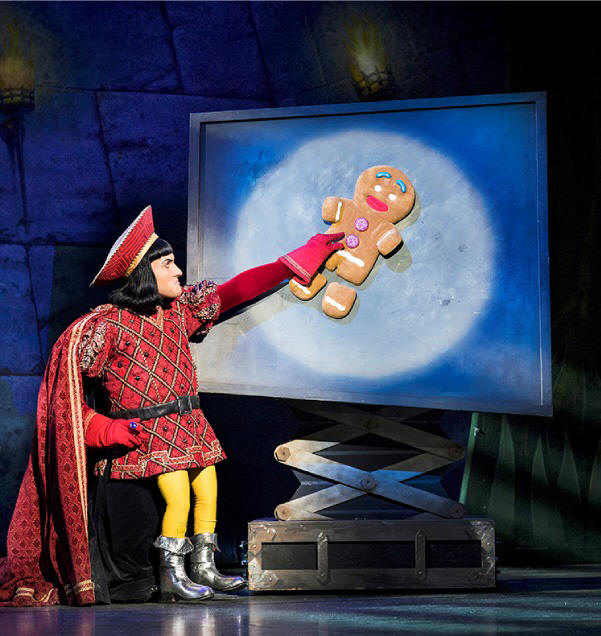
|
The Rocky Horror Show Wolverhampton Grand **** THE Rocky Horror Show is probably the most fun an audience can have in a theatre with its clothes on - or, in in the case of many of its number - with ,ost of its clothes off. The show generates acres of flesh squeezing out of basques, suspenders fishnets and assorted costumes among the paying punters with at least one gentleman not having thought through the sartorial nuances of wearing a rather fetching outfit when it came to a visit to the comfort zone, as the Americans would have it, at the break. Basques are a just that bit short on flies. The show has always encouraged audience
participation but that has been toned down a little by theatres over the
years who now discourage the hurling of rice, Bounty bars and Kit Kats
on stage and a deluge from high powered water pistols as cheap FX for
the storm scene. The shouts and comments are still there though and this must be one of the few if not the only show with an audience participation script available - indeed the internet can boast several versions - with what to shout, when and where so woe betide any poor actor who fluffs his lines with several hundred prompts a night out there. Amid the shouts from amateur Rockys - and a few horrors - with their audience scripts we had the usual mix of crudity badly disguised as wit, shouts at inappropriate moments and, thankfully, some genuinely funny heckles. The excellent cast must have heard it all before though and Ainsley Harriot, as the Narrator camped it up with the best of them carrying a packet of his couscous around ready for the inevitable comment about his career. To most people he is a TV chef but don’t forget it is less than 20 years ago that Ainsley was half of the double act The Calypso Twins on the London comedy circuit where he no doubt picked up the art of working an audience. If you can't do it in the comedy clubs you die. Star of the show though was undoubtedly David Bedella (above) and his voice as smooth and dark as rich chocolate who brings Frank ‘N’ Furter to louche life. He struts around the stage with his tongue so far into his cheek it must have been close to coming out of his ear - which in any Rocky show would not have been surprising. He played unashamedly to the audience usually responding to heckles with a look, a smile or a gesture although one particularly crude comment did elicit a response as to whether the heckler was speaking from experience. His voice is like rich velvet ANY TIME DAY OR NIGHT For those who have been in a time warp this Richard O’Brien phenomenon which first saw the dark of night in the 63-seat Theatre Upstairs at the Royal Court in 1973 has been going almost continuously ever since. It is almost like I Love Lucy and M.A.S.H. in that somewhere in the world at any time night or day there is probably a Rocky Horror performance going on. It is a camp pastiche of B-movie science fiction and horror films with Janet (Haley Flarerty) and Brad (Richard Meek) just engaged and stranded on a lonely country road in a thunderstorm. But what luck! They have just past a large gothic castle lit up by flashes of lightning so why not disregard every danger sign and knock on the door for help. Riff-Raff (Brian McCann) welcomes them in and they find themselves in a world where every low budget and sensationally bad horror and alien movie of the 40s and 50s seems to have found a home. One lovely touch was a bank of TV monitors where Frank tracked the movement of Dr Scott (Nathan Amzi) while the audience tracked the movement of Riff-Raff behind the screens holding the cut out of the doctor in his wheelchair as its shadow went across the screens. Some of those 50s horror films had special effects that would not give you much change out of a fiver and it was nice to see that tradition kept alive. STRONG NUMBERS It is great fun, high energy and the excellent five-piece band do a wonderful job playing around heckles, interruptions and asides which is no easy job. Time Warp is the best known of the songs but there are a number of strong numbers in there and all the songs are performed well by an enthusiastic cast. One word of warning though. Rocky does have a smattering of naughty bits . . . or to put it another way it has quite a lot of explicit sexual content so anyone taking children - or maiden aunts who think sex is what coal comes in in Solihull - should be aware of that. Not that the sexual content is particularly crude or mucky, far from it, it is camp and stylised and is more cartoon than erotic. It is designed to produce laughs rather than shock but it is there all the same. Very tongue in cheek . . . amongst other places. Vulgar with a smile rather than a snigger. So you have been warned. That being said you would hope that anyone who goes to see a show where the star is a bloke plastered in make-up wearing a basque, suspenders, fishnets and high heels might just have an inkling this is not likely to be the sequel to The Sound of Music. You get the feeling the cast - and a large chunk of the audience - are there to enjoy themselves come what may and the feeling is infectious. It is nigh impossible to see the show and not come out smiling. To 27-02-10 Roger Clarke |
|
Ballet warms Siberian weather Giselle Russian State Ballet of Siberia Wolverhampton Grand **** MARIA Kuimova (above) must be every little girl’s dream of a ballerina. She is slender, elegant, looks beautiful and glides across the stage as if floating on air. As for her stunning series of arabesque penchee? It was enough to make grown men wince. Her balance, poise and flexibility is way beyond that of mere mortals who wobble just standing on one leg. The 26-year-old danced the title character in Giselle, the opening night of a three night, three ballet run by the Russian State Ballet of Siberia who must have been impressed that the Grand made them feel so much at home by organising a blizzard for their arrival. Giselle, first performed in Paris in 1841 is one of the classic 19th century romantic ballets which is all about love and betrayal with forest spirits thrown in and is set in the Rhineland of the middle ages. It all starts when Count Albrecht of Silesia (danced with a mix of boldness and sensitivity by Vladimir Tsybenov) disguises himself - not that well I might add - as a peasant, Loys, living in the village to sow a few wild oats before he marries his betrothed, Bathilde, the daughter of the Prince. ALL POWER AND ANGST Giselle falls for him although the local gamekeeper Hans, (Kirill Litvinenko, all power and angst) who also fancies Giselle, warns her that Loys is a bit dodgy. Hans is Hilarion in most productions, but what's in a name particularly in ballet. Loys and Giselle dance a love duet with mum Berthe (Vera Surovtseva) trying to stop it because of her daughter’s dicky heart. When the Prince and his entourage turn up and Giselle discovers the truth she tries to kill her self with Albrecht sword but before we get all that messy blood and gore her heart gives out and she dies just in time for the interval. The second act set in a forest is more of a dancing spectacular. Just so you know Giselle is really dead there is a headstone with her name on that can be read from space. Myrtha, Queen of the Wilis, was beautifully danced by Anastasia Kazantseva, like Kuimova, a graduate of the Krasnoyarsk State Choreographic School. She calls up the Wilis, a group of ghostly virgins who have died of unrequited love, who are a fine corps de ballet, 18 strong who, when reuired, move in perfect unison. They are there as Myrtha raises Giselle from her grave and then starts to initiate her into her ghosty band. When Hans turns up the Wilis set him into an endless dance where he is finally forced into a lake exhausted and drowns - these virgin victims of unrequited love have a pretty strong revenge agenda against men and next start on Albrecht. Giselle dances with him but as exhaustion is about to see him shuffle off his mortal coil to join Hans in the lake dawn breaks and the Wilis, like vampires, have no power in daylight so vanish back into the marsh and Albrecht is saved, Gisselle goes back to her grave and the poor old count is left alone grieving on her grave. TRADITIONAL PRODUCTION This is a traditional production revised by the RSBS’s artistic director Serei Bobrov with the ballet attributed to the orginial choreographers Jean Coralli and Jules Perrot along with Marius Petipa, the choreographer for the Imperial Ballet who created the revivals at the turn of the 19th century and Leonid Levrovsky, the Bolshoi Ballet choreographer and director who was responsible for the celebrated 1944 production. Like a lot of ballet the tale is all a bit vague when it gets on stage and you would struggle to know what was going on without a programme or knowledge of the ballet. It was a few mimes and scenes light of making things clear. That being said the dancing was more than good enough to engage your interest while the orchestra under Anatoly Tchepurnoy produced a pleasing, romantic interpretation of Adolphe Adam’s score. You could just sit back, relax, watch, listen and enjoy. One small point though, maybe it is Russian pointe shoes, but they do seem noisier then those of English and Western companies. Not a problem but interesting all the same. 18-02-10 20-02-10 Sleeping Beauty. Roger Clarke
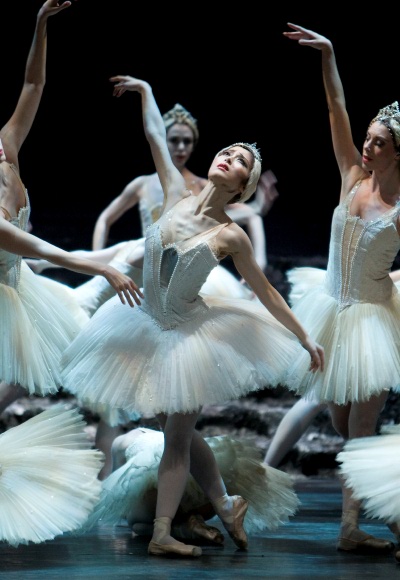
Swan Lake TCHAIKOVSKY'S sumptuous, lyrical score has helped make Swan Lake one of the best loved and widely known ballets in the world. Almost every note is like an old friend so whether it was being back on familiar ground or simply the fact it had stopped snowing both the company and audience seemed to be more comfortable and at ease then with Giselle. The opening in the palace might have had a bit more splendour and gravitas as the curtain went up but once into its stride the Russian State Ballet of Siberia production kept up a decent pace helped by their excellent orchestra under musical director Anatoliy Tchepurnoy. Whoever was responsible for the violin solos down in the bowels of the pit deserved their own round of applause with some memorable interpretations. And when it came to interpretation Ekaterina Bulgutova was a fine Odette/Odile. As the Princess she was all grace and vulnerability with a moving pas de deux with Siegfried while as Von Rothbart’s daughter Odile she steps it up a notch or two. HANG IN THE AIR Seigfried (Vyacheslav Kapustin) shows good use of the stage with his solos and managed some hang in the air jumps but one the highlights was the inventive dance with Von Rothbart shadowing him. It was a clever foil for the main female part with Seigfried in his white and silver almost like Odette dancing against her shadow of the black malevolence of the Evil Genius almost as Odile. Von Rothbart was danced by Vladimir Tsbenov by the way, who was earning his corn after dancing Albrecht in Giselle and once again was the pick of the male dancers. Another inventive touch in this Russian production was to split the Corps de ballet of 18 into half black and half white swans in the final scene. This must go down to the company’s Artistic Director Sergei Bobrov who is down as choreographer along with Marius Petipa and Lev Ivanov. As the latter pair were responsible for the 1895 revival I think it is safe to say Bobrov can claim the credit for that one. Other high spots included the dance of the cygnets which was exquisitely executed by Nadezhda Vlasova, Anna Germizeeva, Natalia Goroshko and Elena Tcherkashina. Anastasia Koreshnikova as the Spanish bride gave us a lively dance as well. All in all this was an entertaining and enjoyable production and even had an alternaive ending to the norm which leaves Odette grieving for her lost love who sacrifices himslef for her. In footballing terms, and what most teams would give for players with feet that quick who could jump that high, the company might not be Champions’ League yet but they are certainly pushing hard for a Europa League place. 19-02-10 Roger Clarke
Sleeping Beauty
****
FOR the second time in three nights Maria Kuimova was the
undoubted star of the show, this time as Princess Aurora.
In her pas de deux with Prince Desire, (the accomplished and
athletic Arkadiy Zinov), seen below, she is rather like one of
those ballerinas you find dancing on mirrors on musical boxes, spinning
and moving en pointe, fixed firmly to the spot.
She has the ability to make the difficult look effortless and her
presence lifts what is a good production on to another level. She is
that good.
Natalii Goroshko, a petite dancer, was also excellent as the Lilac
Fairy. She is a tiny thing with a compact, elegant style almost floating
around the stage.
There were some other fine performances including Anastasia
Koreshnikova who moved on from last night’s Spanish Bride in Swan Lake
to the evil fairy Carabosse, a real pantomime villain with a hobble,
bent back, sneers and snarls at the audience and a cape the size of
Dudley to sweep across the stage.
Vladimire Tsybenov was back as well, this time filling in as a
guard, a pretender to the heart of the princess as well as Bluebird -
the lad must be really coining in the overtime. Like Kuimova he does tend to lift the stage when he appears although his thunder was stolen a little in the fairytale section by Anastasia Kazantseva’s very attractive white cat in an amusing dance with Denis Pogorely’s Puss-in-boots. ADDED FUN
It might not have had the technical range of Bluebird and
Princess Florine (Anna Germizeeva) but it did add a bit of fun to
proceedings.
The costumes were the most opulent of the run, a sort of Three
Musketeers, meets Hunchback of Notre Dame meets Disney, a little garish
if one is honest and very East European and the orchestra under
Anatoliy Tchepurnoy were again in good form, although not quite up to
their Swan Lake level, but somehow it was a production that fell just
short of of where it could have been.
The second half in particular had a feel that some padding had
been added and the pace was not helped by a long, long pause after
Prince Desire had exited stage right downstage to reappear upstage stage
left for his next solo. Whether he had just missed a bus, was sent the
wrong way or took a wrong turn we never knew although the audience, the
dancers assembled like statues on stage and the orchestra poised with
pursed lips had plenty of time to think about it.
Even rearranging the spear carriers around the stage with a few
waves, bows and curtsies would have given the audience something to look
at while the prince made his way through the back streets of
Wolverhampton.
A small point I know, but important all the same. That being said
the Russian State Ballet of Siberia created a most enjoyable evening and
perhaps as a reviewer you are looking more closely for good and bad
points than the audience who clap loudly if they like it and politely if
they don’t. At the end they were happy to applaud enthusiastically with boos for Carabosse and those richly deserved cheers, whistles and shouts for the wonderful Aurora until the house lights came on as a hint it was time to go home. Roger Clarke |
|
A wig that can change the world Cling to me like Ivy The Door Birmingham Rep **** SAMANTHA Ellis’s bittersweet tale of tradition and values, love and religion gives a fascinating glimpse into Orthodox Jewish life. We have nursery school teacher Rivka, all innocence and sexually naive played beautifully by Emily Holt in her theatrical debut since leaving LAMDA last summer. She is planning her wedding and loves her sheitel. Sheitel? Do keep up, those are the wigs worn by married orthodox Jewish women. She is the daughter of a rabbi, untouched by human - at least male human - hand and weighed down by tradition. Her friend is the slightly, oh let’s be honest, lot more worldly Leela (Mona Goodwin) a medical student who is a Hindu - the relevance to be seen later. Rivka is set to marry David (David Hartley) the son of a rabbi who rebelled and became . . . an optician. That’s really letting your hair down. He makes dull seem interesting. COMIC, SAD AND INTENSE Her father Shmuley (Edward Halstead) feels he always has to prove himself after becoming an Orthodox Jew later in his life while Rivka’s grandmother Malka, a wonderfully comic, sad and intense performance from Amanda Boxer, is all Chicken soup, warm humour and words of wisdom. She also has a colourful past which, like most things in this well crafted play, has a bearing on events. Into their cosy world, where the women see life through OK magazine, comes both Patrick, (Gethin Anthony) an eco-warrior and tree sitter and a challenge to the established order when a chance remark by Victoria Beckham about hair extensions caused a worldwide Jewish crisis. Beckham was asked if her hair extensions came from prisoners in Russia forced to shave their heads and she flippantly said she had half of Russian Cell Block H on her head. Hardly a crisis you might think. But in the celebrity obsessed fuss it emerged 400 tons a year in the international hair trade came from the Tirupati Temple, a famous Hindu Temple of Lord Venkateswara located in the hill town Tirumala of Andhra Pradesh. WIG BURNING Still wondering where the crisis comes in? Orthodox Jews consider Hinduism involves idol worship which is a big no no, second commandment, graven images and all that in the Decalogue; so that would make any wigs made from hair from a Hindu temple questionable under Jewish religious law. Hence the crisis with wig burning in the streets and Jewish wives and widows wearing synthetic wigs and swim caps until the matter was resolved by a London based rabbi who went to India on a fact finding mission then on to Jerusalem to make a decision. Amid all this comes Rivka’s sexual and emotional awakening and to an extent a discovery by each of the characters as to what is important and who they are. The set is a clever kitchen designed by Ruari Murchison which gives us two sinks, one for milk one for meat and never the two should mix, all part of a life most of the audience did not know existed. TOUCHING MOMENT There is a touching moment, literally, when Rivka pretends she has something in her eye and asks David to have a look - he can touch her for medical purposes apparently. It is a simple moment but one we all know is going to be important. The set converts with a few hooks into a tree top where Rivka finds another world which will change her life for ever. The climax is neither happy nor sad, it just is - which is, in the end, what life is is for most people. There are drawbacks for a non-Jewish audience with some of the words and terms, rather like watching a sport where you don’t know all the rules and have to work it out as you go along but it is not difficult to follow and the effort is well worthwhile. This is a world premiere and from its reception it looks like the play could well be around for some time. It is beautifully written, sensitively acted by a superb cast and well directed by Sarah Esdale. To 27-02-10 Roger Clarke www.birmingham-rep.co.uk 0121 236 4455 |
|
More than a trace of excitement
Traces
Birmingham Hippodrome
TRACES is hailed a mix between circus and contemporary dance all
to an eclectic soundtrack with everything from blues, to hip-hop via
indie and euro trance along the way. The
French-Canadian company les 7 doigts de la main (The 7 fingers) were a
big hit at the Edinburgh Festival in 2007 and after sell out seasons in
the West End, New York, Paris and Montreal
Traces is on its first UK tour with a three night run at the Hippodrome.
With a special half term offer on the Hippodrome website - up to
two children half price with every full paying adult - it was nice to an
audience with such a wide spectrum of ages.
Indeed the diverse audience finds favour with the show, which is
almost impossible to pigeon-hole; given that it has so many different
strings to its bow.
It is rather like watching a great music video which you've never
seen before (but know that you’ll love), or your favourite bits from
your favourite cult film, which you want to share with everyone but not
necessarily tell anyone about.
There is something bizarrely hypnotic about watching the five men
and one woman perform in perfect harmony. They can make an everyday arm
chair as impressive as Chinese poles, and every facet of the performance
is meticulously planned, yet effortlessly executed.
Antoine Auger, Antoine Carabinier-Lepine, Jonathan Casaubon, Genevieve
Morin, Philip Rosenberg make you want to take up Parkour and erect
some Chinese poles in your back garden . . . but their grace and speed
are deceptive; only the heaving of their chests show just how hard they
work and how far they push themselves.
It is a strange experience to watch Traces - but strange in a good
way. The intimacy of the piece, punctuated by charming humour and
contemporary references make for an absorbing 1hr 40mins.
It is like watching everything that your average English Theatre
goer isn't but wants to be - like a puckish, adroit, witty, European
fight club.
This modern day circus, with its ancient skills clothed in modern
phrasing and philosophy blows every dance show currently swamping the TV
channels into the oblivion. Traces is the real deal, make no mistake.
With such a gushing review one might be left to wonder why only
four and a half stars and not five. Well the reason is simple enough, I
didn't like the end, not just for the slightly clunky and artsy finale
but also because it was the end of such a great performance - and I'll
dock half a star out of spite just for that! If you're in Birmingham and want to see something special, see Traces and if you've got kids then the aforementioned offer provides superb value for a superb show - and you might even look a little bit cool to your kids; just avoid the temptation to do a flag handstand on your car bonnet afterwards. To 17-02-10. Theo Clarke Review 2 * * * IT might have been a warm-up for a casual basketball game as five scruffily dressed characters charged round stage bouncing and passing a ball with a reasonable amount of skill at the start of this unusual show. But the action is set in a makeshift bunker with the agile young people amusing themselves prior to some impending disaster, and they suddenly explode into a remarkable display of acrobatics that has the audience gasping for breath. This is the French-Canadian company Les 7 Doigts de la Main who took the Edinburgh Festival by storm in 2007. Easy to see why. Their props might have been the remnants of a war scene....a battered old piano, broken tailors' dummies, faded skateboards, a couple of steel poles rising high from the stage floor, and a few steel hoops. But the four men and one woman use them brilliantly, showing amazing agility in climbing the poles and swinging from them, flying backwards and forwards through the hoops. One of the men even spins inside a giant steel hoola-hoop. The dazzling action is set to a sound track ranging from rock 'n' roll to blues and hip-hop, with images of the five characters at various stages of their lives flashed onto a screen at the rear of the stage. Paul Marston |
|
Lake falls to power of swans Matthew Bourne’s Swan Lake Birmingham Hippodrome ***** THE problem with Matthew Bourne’s Swan Lake is the name. Not that it is much of a problem given the standing ovation, sustained applause and cheering at the end of the opening night of the swan’s week-long roost at the Hippodrome. But would West Side Story have received the same welcome and adulation had it been called Leonard Bernstein’s Romeo and Juliet? Two productions both alike in dignity as one might say. If you have never seen the traditional Swan Lake ballet and your knowledge of the music comes from a Tchaikovsky’s greatest hits compilation CD then this is a stunning piece of modern dance.
But if you turn up thinking this will be a
performance little changed since the ballet’s inauspicious premier in
1877, expecting a graceful, elegant and female corps de ballet, fluffy
swans in tutus, think again.
Swans on the park lake are hardly cuddly and neither are Matthew Bourne’s nasty birds. En pointe has been replaced by power, aggressive, raw power. Bourne's all-male herd of swans no longer decorate the stage they dominate it. WOODCUTTER AND GOBLINS The tale too has been changed bringing in night clubs, paparazzi and even a very funny send up of traditional sentimental ballet involving a princess, a woodcutter and goblins. Throughout it all though we have the Prince, danced and acted superbly by Dominic North who guides us on the slow descent into madness. As a child the Prince had nightmares about swans and a need for love from his mother the Queen which never seemed to be there. He finds a sort of happiness with a girlfriend who is, let us be honest,closer to the Royle than the royal family - a beautifully crafted performance from Madelaine Brennan. When that starts to flounder the prince heads off to Swanks, the Stringfellows of the kingdom where the dancing becomes closer to jazz and 70’s disco than ballet. Once again the Prince finds himself an outsider and when he sees the private secretary (Steve Kirkham) paying off his good-time girlfriend to vanish, the journey to the dark side accelerates. Whether the swans he finds on the lake in the local park are real or a figment of his troubled imagination we will never know but this is the closest the prince has come to happiness and the closest we have come to the traditional story. LEATHER PANTS AND SWAGGER The link to the ballet continues when a stranger appears as a lewd, arrogant sex machine at a royal reception, all leather pants and swagger. As in the traditional version when the white Odette and the black Odile are danced by the same ballerina, Richard Winsor takes on both roles. He was last at the Hippodrome in November as Dorian Gray and brings a sinister grace and power all of his own to the roles where the effort and energy needed must leave him a few pounds lighter after each performance. As the Queen and the stranger become more than good friends the Prince snaps, draws a gun and in the melee the girlfriend is shot and the Prince’s descent to insanity accelerates until when it is too late the queen finally expresses her feelings.
The Americans have not had a monarchy since they
discovered the benefits of tea but New Yorker Nina Goldman manages a
truly regal performance as the Queen as she glides
about the stage with an effortless elegance. The stage too is worth a mention with another huge, magnificent set from Lez Brotherston who was also responsible for the costumes. Rick Fisher is also worth a mention. He was responsible for the lighting design which, as in this case, can add much to a production. Clever lighting gave us everything from Victorian footlights for the comedy ballet scene to the creation of extra characters and atmosphere with towering shadows or solitary spots. It is a masterclass in lighting and theatre design. Matthew Bourne is at pains to point out that this is not a ballet and he is right, it is a piece of magical theatre and contemporary dance and since it appeared in 1995 it has established itself as a modern classic to become part of the GCSE and A level syllabus. Comparison with the traditional Tchaikovsky ballet is interesting but hardly necessary to appreciate a landmark production. It is not in competition with tradition or an alternative to ballet. This is a piece that stands firmly and squarely on its own feathered legs and probably more than anything is responsible for the growing interest in modern dance. See it and you will understand why. To 13-02-10. Roger Clarke Birmingham Hippodrome Box Office 0844 338 5000 Groups and schools 0844 338 7000 |
|
A rock down memory lane Dreamboats and Petticoats Wolverhampton Grand **** THIS is not so much a show as an animated jukebox, one of those Greatest 60s Albums EVER Since The Last One brought to life. Not surprising really as the show evolved from a collection of compilation CDs of the same name and with 43 tracks - sorry songs - to fit in there is not lot of room left for dialogue or plot - but it is great fun. The plot, such as it is, is as thin as Twiggy in her
heyday and revolves loosely around a song writing contest for youth
clubs, a fledgling group, a cocky, older, God’s gift to women would be
pop star, and the nice honest lad and the nice honest girl who we know
will eventually get together amid the ping pong and Jubblies at St
Mugo's Church youth club somewhere in Essex. In short it is a bit like the subject of many of the 60s songs, a teenage life in three minutes, but this is not about clever, witty writing, great drama or landmark theatre - it is about nostalgia, lost youth and memories Most of all it is about fun and having a good time and in that it served its purpose. Many of the audience seemed old enough to remember when the songs such as In Dreams, Bobby’s Girl, Runaway and the like first came out while I suspect to most of the cast it was more of a history lesson. With so many songs the plot and character development were brought down to snapshots but the cast packed the show with enormous energy and produced some fine singing and musicianship. There was no off-stage band or session musicians here - the cast managed two keyboard players, seven guitarists, a drummer and five brass between them to make all their own music and all were good, particularly Alan Howell on lead guitar and Tim Jackson on keyboards. Remember that the next time you think X-Factor is
the pinnacle of talent. There were a few novelty moments. Josh Capper as the male hero Bobby had a very pleasant voice on most songs but when it came to Roy Orbison and those high notes . . . ah well. Bobby was always going to end up with Laura, (Daniella Bowen who has a lovely voice) who we all knew when the glasses came off, the hair came down and she lost the unflattering school uniform, was going to be a real stunner, and we were right. Didn’t Bobby ever watch romantic comedies at the old fleapit cinema? COCKY ROCKER But it took auditions for a singer for the youth club band, a coach outing to Southend, Bobby’s dalliance with the flighty and somewhat well developed Sue (Carolynne Good who had a superb voice that deserves more exposure) and the cocky rocker Norman (played with some panache by X-factor contestant Jonathan Bremner), seen left with Sue, before true love blooms in the big finale which, to make sure the audience went home happy and humming along, had Lets Twist Again, C’mon Everybody and At The Hop to get the audience up on their feet. C’mon Everybody, incidentally, was sung by Laura’s brother Ray who was played by Wayne Smith who was in fine voice all night and, it was announced, will soon be leaving the show to become Neil Sedaka in another Bill Kenwright production, Laughter in the Rain which will be at the Grand on March 23. It is not great theatre but it is high energy, well sung and performed, fast paced and most important - great fun. To 13-02-10. Roger Clarke |
|
Alexandra Theatre, Birmingham *** WHEN you go to see a stage adaptation of a hit television series it's inevitable that you will want to compare the main characters with the much loved stars of the small screen. So people attending the matinee performance of Porridge probably felt some disappointment when they heard EastEnders actor Shaun Williamson, who has earned high praise for his performances as old lag Norman Stanley Fletcher, was out through illness. But they needn't have worried. Mark Pearce took over the role with such confidence he would have impressed the late Ronnie Barker who played Fletch with such distinction on telly. Pearce even resembles Barker, and he was totally comfortable with the sharp humour of the crafty inmate of Slade Prison. The same could be said of Daniel West, playing Fletch's cellmate Godber, Nicholas Lumley (the canny Scottish prison officer, Mr MacKay), John Conroy (Barrowclough) and Peter Alexander (privileged prisoner Grout). How does this show compare with Porridge on the box? Not quite as tasty, but good entertainment. Paul Marston |
|
Snow White on Ice
Russian Ice Stars
Alexandra Theatre
CIRCUS, ballet, panto and even a touch of
Disney all combined as the Russian Ice Stars UK tour of Snow White on
Ice arrived, along with around 16 tons of ice, at the Alexandra Theatre
in Birmingham. Snow White is an interesting choice, given that it
is a fairy tale long ago swallowed up by the Disney Empire and lovingly
spat out the other side in the form of a cartoon classic; indeed the
audience was covered with tiny versions of Uncle Walt’s Snow White, with
replica costumes worn with barely concealed glee. The Ice Stars wisely choose to give only a small nod
to the cartoon (pleasing the young audience enough to make it known that
they were watching the right production) instead focussing on the
narrative of the traditional fairytale, give or take the various
acrobatic set pieces crammed into the show for the sake of razzle dazzle
quotas. Chief acrobats were Alexander and Ekaterina
Belokopytov as the strongman and jester, both graduates of the Moscow
Circus College, who managed to bring the feeling of the Circus big
top to the compact stage - all that was missing was a pony, some custard
pies and the clowns.
They injected a real fear factor into the
choreography, no mean feat given the size of the stage. Both,
incidentally, have toured with the Moscow Circus on Ice. Of the show skaters themselves, top of the class were world and European pairs champion Valdis Mintals as Prince Charming and Irina Tkachuk as Snow White (who made a couple of dramatic saves, to stave off falls) - both pictured right - along with Alexei Kozlov as Toppa the crow who injecting a little panto spirit into the production.
Top marks go to choreographer Guiseppe Arena, who
manages to utilise the stage space fully without it appearing cramped.
The skaters are constantly moving, a dramatic necessity given the lack
of words and the ever present (and sometimes quite grating) musical
score from Silvio Amato. With plodding, repetitive theme music, the evil
Queen Drina (seen above) , skated by Svetlana Kuprina, had a job on her
hands to make her baddie part bad enough. But to her credit, boos and
hisses were coming by the end. The show, based on a Russian folk tale version,
sometimes got a little lost in translation but it was not difficult to
follow and everyone could piece together the blts of the story easily
enough. Overall, don’t go to this if you are expecting
Disney’s Snow White on Ice but do go if you want to see a Russian
production that manages to put on a pretty good show, on a relatively
small rink. Theo Clarke Click on Snow White for
a clever illustrated book of the fairy tale at
http://www.wildroseltd.co.uk/productions.html#
THE television show Dancing on Ice will never seem the same after this truly spectacular skating fairy tale. A cast of more than 20 world class medal winners give a breath-taking performance that has the audience gasping in awe at the sheer skill and daring of the remarkable Russians. This is skating at a different level....at times some of the skaters even fly above stage on a wire in an amazing display of aerobatics that is a joy to watch. The Russians are leading performers of world class ice skating in a theatre format, and they tell the timeless fairy tale to music, without a word spoken. It's easy to follow the plot, which opens with the Wicked Queen drinking a potent mixture from a foaming cauldron which turns her from an old crone into a beauty, but according to the magic mirror, still not as beautiful as Snow White.
But her jealous plan to dispose of her rival is beaten with the
help of the seven dwarfs - one must be 6ft 4ins tall without his skates
- and finally the intervention of the handsome Prince Charming who ends
the show by skating with Snow White and spinning like a top, holding her
aloft on one arm. Incredible! These Russians are red hot. Paul Marston |
|
Trollope lives again in Fox Edward Fox - an
evening with Anthony Trollope
Lichfield Garrick
****
EDWARD Fox exudes class and in this one man show he is an
eloquent, elegant, urbane Trollope, one of the giants of English
Victorian literature.
The one time GPO surveyor’s reputation dipped a little after his
death with the publication of his autobiography.
The critics among the Victorian chattering classes were already
dismissive of his huge output - 47 novels and dozens of short stories -
as if quantity and quality were mutually exclusive and when his
autobiography revealed he also had a set routine for writing a daily
quota and even admitted he wrote for money rather than art then he was
damned in their eyes, at least for a while.
But the public never deserted him and he was to become one of the
English language’s best loved novelists. How Trollope spoke or acted we
will never know but in the hands of Mr Fox he certainly comes alive on
stage.
Devised and directed by Richard DIgby Day the production mixes
Trollope speaking from his Autobiography with readings from some of his
novels introducing characters such as The Warden Septimus Harding, Dr
Grantly, The Bishop and Mrs Proudie, and the Bishop’s domestic chaplain
Mr Obadiah Slope along with Dr Thorne and finally Johnny Eames’
encounter with Lord de Guest and his bull.
It is a testament to Fox’s skill as an actor that one man and a
chair could fill a stage for so long.
In the excerpts from the Autobiography Trollope spoke directly to
the audience explaining in part how he worked and what he though of his
novels and characters and his beloved county of Barsetshire.
The readings then took the audience into Trollope’s world of the
Chronicles of Barsetshire through The Warden, Barchester Towers, Doctor
Thorne, Framley Parsonage, The Small House at Allington and The Last
Chronicle of Barset.
It was noticeable that in the first half Fox did not need
the aid of any script for the dramatised readings but as the second half
wore on he relied more and more on the words although with that measure
tone and elegant voice that hardly seemed to matter.
The Trollope fans in the audience loved it while it awakened an
interest in the writer among the rest.
Roger Clarke |
|
Scottish play hooks the kidz Shakespeare4Kidz Grand Theatre, Wolverhampton
* * * * WHAT a treat to see young children packing a theatre and lapping up one of the Bard's classics, albeit given a few new twists by this hugely talented company. The musical adaptation is just about the perfect recipe for youngsters, with a few scary moments, including murder, intrigue, some catchy songs, slick dancing, a realistic sword fight and a touch of naughty humour to keep them glued to the action. Pupils aged between eight and 16 years, drawn from 49 schools - 36 primary and 13 secondary - loved every minute of the drama, spontaneously joining in with rhythmic clapping during the cracking finale. There were shy giggles at the first kiss between Macbeth and his lady and at references to a baby being breast fed, then howls of laughter when Noel Andrew Harron took the stage as a cheeky porter at the Macbeths' castle, attracting loads of audience participation with a game of Knock-Knock, Who's There. The dramatic scenes were well handled, with outstanding performances from Jason Lee Scott (Macbeth) and Claire Marlowe (Lady Macbeth). But without doubt it is the musical additions to this play that prove the most important lesson for the fascinated young audiences. Four performances were given at the Grand. Paul
Marston |
|
IT IS a bit of a toss-up whether the REP has the first Christmas show of 2010 or the last of 2009 – not that the small children gazing in amazement at a flying snowman and a boy will mind. To them, and, let’s be honest, to those to whom childhood is a more of a memory test, The Snowman has established itself as a festive classic. It is a magical piece of theatre with a score by Howard Blake and a song for which the word haunting might well have been coined. Since 1993 when the stage production first appeared at the REP it has become a traditional Christmas show in London, having just completed its 12th season, has played to sell out houses in South Korea and is back once again in its birthplace.
American actor Brad Madison arrived from playing the Snowman at The
Peacock in London to carry on the role in Birmingham and manages with
shrugs, a tilt of the head here and there and lolloping arms and legs to
convey an amazing range of emotions. Not an easy feat while encased in a
stifling suit – which must be akin to a sauna – with no chance of facial
expressions or even eyes to give a clue. For anyone who has been off the planet for the past 20 years or so the Snowman tells the tale of a 12-year-old boy who wakes up to find it has snowed so builds a snowman. After going to bed he sneaks downstairs again to see if his snowman is still there and finds him not only still standing but alive and ready to take the boy off on a series of amazing adventure which sees the pair eventually flying to the Pole. Bit of a problem here as Santa is there and as we all know Santa lives at the North Pole but we also have penguins and you only find them at the South Pole – all right, I know, I really should get out more. FUN AND ENTHUSIASM Meanwhile the boy, played in this performance with plenty of fun and enthusiasm by James Wilson, returns home to bed and come morning the snowman's worst nightmare, a thaw, has left our frozen hero as a puddle - big ahhhhhh for the Snowman. But before we can feel too sorry for the show's liquidated asset it starts to snow again and as the boy excitedly dances around in a new blizzard we just know that once the audience has cleared off he is going to build the snowman once again for another night of adventures. The story is easy to follow in mime in what is a piece of dance, a children’s ballet. Between building the snowman and seeing him melt we have dances with a slinky cat, a ballerina, pineapple, banana and a shimmying coconut. There are squirrels, badgers, reindeers and a whole host of snowmen from Chinese to Fred Astaire, cowboy to a Highland lassie with a nice line in a Glasgow kiss as well as Father Christmas and the penguins. More ballet is added with an Ice Princess and Jack Frost. It all ends with a blizzard and the look of open-eyed wonder of virtually every child’s face as they left means another generation have been hooked. This is family entertainment at its best. It runs until 31-01-10 www.birmingham-rep.co.uk 0121 236 4455 |
|
Festive fare with a twist The Holly and the Ivy Lichfield Garrick *** THIS Wynyard Browne play about a vicar who puts his parish before his children was first staged in 1950 but is probably best remembered for the 1952 film with Ralph Richardson as the clergyman and Margaret Leighton and Celia Johnson as his two daughters, Margaret and Jenny. Set at Christmas, 1947 the play has nostalgic warmth with its old fashioned phrasing and attitudes although it does feel a little strange to be watching a festive play at the end of January. Is it late or early? Who knows? It is the difficulty of a play with a Christmas theme but, to their immense credit, this Middle Ground Theatre Company production does manage to build some festive atmosphere. Jenny (Lindsay York-Jones) lives at home in the vicarage and wants to marry David (Tom Butcher) but won’t leave her father, the vicar, Rev Martin Gregory (Philip Madoc). Just to add a bit of urgency to proceedings David has just got a new job which involves heading off to South America for five years in a month’s time. As the family assemble from all corners on Christmas Eve though the differences and splits between the father and his children, the drunk Margaret (Corrine Wicks) and soldier Mick (Chris Grahamson) are slowly revealed. What is comes down to is that age old problem that it is difficult to act naturally or be yourself socially with policemen or vicars (even journalists) - even if it happens to be to be your dad.. Family friend Richard (Alan Leith) tries to keep the peace which is a task made more difficult once aunts Bridget (Sally Saunders) and Lydia (Joanna Wake) put their oar in. Bridget is never happier than when she is miserable while Lydia loves to be nosy and interfere in the nicest way. DEEP, DARK SECRET Jenny’s wedding and trip up the Amazon or wherever depends upon her London based fashion writer sister coming back to the old family pile at least long enough to get the old boy sorted but she has a deep, dark secret (at least for 1947) that she has never been able to tell to her nearer to God than she dad. The end, as you might expect in the early post-war years, is sentimental and a little pious with the message that common ground can be found in differences. There is not a lot of pace in the plot but the cast of eight keeps things moving along nicely although personally I found the plethora of accents, two Irish and a strong, heavy Aberdeen, at times distracting without adding a great deal to the story. That being said there are some solid, strong performances in this period piece, particulalry from the put-upon Richard and slightly loopy Bridget while Philip Madoc’s Vicar finds some nice touches. The play is not going to set theatres alight but it nicely captures life in a country parish just after the war and is a simple tale, well told. To 30-01-10 Roger Clarke |
|
Pluck lose their way among the icebergs Pluck - The Titanic Show
Lichfield Garrick
PLUCK’S first show, Musical Arson, was an Edinburgh festival
sell-out and was hilarious. It was musical mayhem ending with Hendrix
played on cello, viola and violin - as no doubt Jimmy had intended all
along.
Their second show, The Specialists, was a little more
sophisticated but still very funny with the same blend of ridiculous
situations, such as carrying a chair with one foot, hopping on the other
and playing a viola all at the same time.
Now we have their third coming, TheTitanic Show, which sadly is a
little like its subject. It struggles to stay afloat and doesn’t really
reach its destination.
The theme is supposedly a tribute to the band on the ill fated
liner but the result is a collection of unconnected musical sketches
which are amusing but fail to raise the belly laughs of the past.
It perhaps does not help that founder Adrain Garratt, the manic,
petulant, pop-eyed violinist has left for pastures new and cellist Sian
Kadifachi is taking time off to have a baby which leaves viola player
Jon Regan as the only original member with newcomers Flora Alison
(cello) and Kit Massey (violin) still feeling their way. Whatever
it was the whole evening lacked pace with some of the gaps between
scenes far too long.
The upper class accents are amusing for a while, the musical skill
is still there with everything from Bach, a nicely played Prelude from
Cello Suit No 1 from Alison, to Leroy Anderson’s Typewriter but
the real silliness and mayhem is missing as is the Pluck hallmark of the
three musicians trying to outwit, outdo and outplay each other.
It appeared at one point that a serious rendering of Nearer
My God to Thee might have produced a rather touching, moving - and
unexpected - end as the stage was left empty and in darkness leaving the
audience in a rather sombre mood reflecting on what was, we should
remember at the end of the day, a human tragedy.
But the audeince could not reflect too long because on came a
rather crass sequence of the band playing on the bottom of the sea
followed by the trio being washed up on a palm tree bedecked shore to
produce, bizarrely, a Morris dancing finale to Mike Oldfield’s
Portsmouth.
The madness, spontaneity, anarchy and plain old daftness have
gone. For a newcomer it was probably an amusing evening but for Pluck
fans it is a titanic disappointment.
Roger Clarke |
|
Bride or groom? What a
reception Ringside Birmingham Town Hall
MEM Morrison’s performance in this joint Birmingham
Rep production is a little like sifting through a box of old postcards
at an antiques fair or turning the tuning dial on an ancient radio and
hearing snatches of strange voices breaking through the static and
whistles that fill the airwaves. Voices and sounds from foreign lands,
pictures of
In Ringside there are parts you recognise from any
wedding, the video camera sequence for example, as well as parts that
are alien and parts that are beyond comprehension unless you live in the
mind of Mem who runs around the vast space of the Town Hall at times
like a Turkish Mr Bean. A play it isn’t, it is more of a . . . happening. The audience arrive to be greeted by 16 attractive ladies dressed for a wedding who are ushers, waitresses, guides, brides and memories. We are no longer audience we are guests, and we have the photographs to prove it! Look on www.memmorrison.com/ringside and eventually the Town Hall pictures will appear along with the weddings in London and Edinburgh. Group after group attending someone else’s life. Having been photographed and told who we are, bride,
groom, mother with cystitis and so on we are seated on long tables
around three sides of the vast emptiness of the Town Hall for the
reception, complete with name cards, crisp white tablecloths and, to
show we are observers rather than participants, headsets.
All the elements are there, cleverly constructed in
cardboard boxes with plates, glasses, wine and even gifts as
flashes of Mem’s life at a succession of weddings in his Turkish Cypriot
family pass by. There is even a seven tier wedding cake, multi-layered
rather like the performance. As with any wedding we have the album, except this
is photographs of Mem’s appearance at weddings since 1974. There are the dances, the symbolism, 16 brides and
finally a groom, or is it a bride, it is certainly Mem, wrapped in a
table cloth, covered in pinned on money, chanting “It’s your turn next”. It is a piece of performing art with humour, some
clever touches and bits I admit I never quite understood but I am
neither Turkish Cypriot nor Mem but the evening did pass the watch test. Look at your watch after any piece has been running
for what appears to be a reasonable time. If the time is much
later than you expected then you are enjoying an absorbing performance.
If the watch has hardly moved then paint drying on the scenery might
well have been the highlight thus far. With Ringside the hour and a half fairly flew by.
www.birmingham-rep.co.uk 0121 236 4455 |
![]() Wakey Wakey: The Prince (Ray Quinn) brings Princess Beauty (Lucy Evans) back to life with a kiss
Sleeping Beauty Birmingham Hippodrome ***** PANTO is all about goodies and baddies and you would have to go a long way to beat the baddies on display in Sleeping Beauty. There are snakes, spiders, ghouls, man eating ducks with tusks, things that I have no idea what they were except they were horrible and all of them attacked each member of the audience individually. Kids, and quite a few adults, were terrified – and they loved it. The real stars of what is otherwise a traditional panto are the 3D effects produced by Amazing Interactives, with a sequence in each half. Forget the old cinema 3D with red and green cardboard specs, this is in your face, literally, fully fleshed 3D you can almost touch and it is worth seeing the show just for that alone. I defy anyone not to be impressed. TRADITIONAL PANTO Not that that is all there is to commend Sleeping Beauty which has all the parts needed for traditional panto and they are fitted together with considerable slickness and skill. First up is the baddy, Carabosse, all green wickedness, exuding evil in the hands of Ria Jones pictured right with Slimeball). The only problem is that you would forgive the old witch anything as soon as she sings – what a voice!
She is lumbered with her sycophantic son Slimeball (Alex Woodhall) who
manages to be more of a hindrance rather than a help as a sort of cross
Then there are the goodies, pretty Princess Beauty (Lucy Evans in fine voice) and the Prince (Ray Quinn). The X-Factor runner-up seemed to be enjoying himself. He seemed most at ease though with his one big band number but to be honest, from the pre-pubescent screams whenever he appeared, he could have sat at the side of the stage and read the paper all night and half the audience would have been happy. SPINNING WHEEL CURSE Batting for the goodies are the Princess’s rather bumbling parents King Clarence (James Paterson) and Queen Gertrude (Kate Dyson) who have managed to keep their daughter safe from Carabosse’s curse until her 21st birthday party. The curse being that if she pricks her finger on a spinning wheel before she is 21 she will die, which of course, at the last minute, she does, otherwise it would all have been a bit of a wasted evening. Living happily ever before does not have quite the same ring. Luckily the good fairy, The Enchantress, (Lucinda Shaw) tones the old curse down so the Princess instead of dying merely sleeps for a hundred years - which, to be fair, is about normal for 20-year-olds. So it is up to our heroes Lady Passionella (Ceri Dupree) and Muddles (Joe Pasquale) to rescue the prince and save the day, or at least the Princess.
Dupree has taken over the mantle of Danny La Rue as the most glamorous
dame on the planet, mixing in over the top costumes with impressions of
Amy Winehouse, Shirley Bassey (pictured below),
Joe Pasquale (seen above with the five toilet rolls of Christmas . . . don't ask) was probably born for panto. His whole act has been about working an audience with silly and at times remarkably clever jokes and nowhere is that more essential than in panto. His timing is superb with not one punch-line lost and at the end he turns what is little more than a filler to give time for scene and costume changes for the grand finale into one of the show’s comedy highlights. The variation on the 12 days of Christmas with Lady Passionella, the King and Slimeball, quickly descends into items being hidden, toilet rolls thrown into the audience, Slimeball chasing around the stalls to retrieve props and general chaos. Joe does look a little worried at one point though. It comes at the end of Act One when he flies from the stage above the audience in the stalls and then above the circle, waving and smiling grimly as he goes and no doubt mentally calculating the breaking strain of wire and the effectiveness of Rawlplugs until he vanishes safely into a hole in the roof. HARD HATS Nothing to do with this show but one national panto company wanted to fly a character over the audience in a theatre on the south coast only to be told by 'elf 'n' safety that a ten seat wide swathe of audience under the wire would all have to don hard hats for the performance . . . These days with lighting-up wands, sabres, and the like on sale in every theatre foyer you can gauge how successful a panto is by the brightness effect. The more red and blue lights you can see flashing among the audience - the more bored the kids. Songs, particularly romantic ones, and any serious conversation to advance the plot tend to have the audience rivalling Blackpool illuminations but apart from that Sleeping Beauty managed to get by mainly in darkness. And you can’t get better than that. The audience booed when required, cheered and shouted as tradition dictates and went home happy – if a little wary of snakes and things that go bump in the night. This is the Hippo’s 52nd panto and once more keeps the tradition well and truly alive. To 31-01-10 Roger Clarke VIDEOS, PODCASTS and more IMAGES |
Shahrazad opens a world of wonder![]() A fishy story: The doctor (Rene Zagger) brings the little beggar (Simon Trinder) back to life to the amazement o the company (All pictures - Keith Pattison) The Royal Shakespeare Company Courtyard Theatre ***** START with beheadings, throw in a body hacked in four and the bloody bits hung from ropes, add a giant, snake eating bird, a corpse eating sorceress, people turned to rocks and, for good measure, a remarkably loud and powerful bodily function and you are automatically on a winner with kids.
Add some engaging acting, clever direction and a tale told at a
galloping pace and you grab the parents as well. We all know this is the
panto season but this is panto with an A-level, witty, at times scary,
sophisticated and great fun.
There are apparently 400 registered storytellers in Britain but you can now make that 401 as the cast of 18 bring the story of Queen Shahrazad and the thousand and one nights to life. Dominic Cooke’s adaptation was first performed at the Young Vic in 1998 and he has brought this new adaptation to the RSC with a cast double in size and a freshness and enthusiasm which is infectious. The Courtyard lends itself to characters appearing or leaving through the audience and Cooke’s hands it also means the stage can empty and fill in an instant as the cast become the 40 thieves on horseback, the cliff hiding the entrance to Ali Baba’s cave and even the treasure itself. SINGING TREE They become a swarm of bloated flies, a singing tree and an impressive, giant flying roc, the bird that hunts the valley of diamonds in Es-Sindibad’s second voyage – they are even a crowd of people now and again. The king, betrayed by one wife, has her executed and then marries a new bride each day for just one night, executing each one at daybreak. His latest bride Shahrazad can keep alive only by telling fabulous stories, so intriguing that the king will spare her each dawn to hear a new story each night.
The original Arabic book was A Thousand and One Nights although in truth
there were only about 260 stories and the RSC only manage six which
involves some quick changes by the cast who play several
parts each as the audience is led from story to story The whole performance has to be an act of collaboration with the audience, this is theatre by consent. The only scenery is imagination. The actors provide an often brilliant framework, as with the people turned to black rocks, or the open sesame cave but it is then up to the audience to complete the jobs and build the picture for themselves. Ayesha Dharker provides the guide for the audience as Shahrazad, (pictured above) setting the scene for each of the stories which she convinces us are the only things keeping here alive as she slowly seduces the king, Shahrayar (Silas Carson) with her tales until he finally learns to love again. . . ahhh. You even get a love story to boot. Shahrazad takes us to the world of Ali Baba, of the little beggar, of Es-Sindibad, Abu Hassan’s flatulence problems, the wife who won’t eat and the envious sisters. FLESH EATING Simon Trinder is full of fun as both Ali Baba’s brother Kasim – he’s the one who gets cut into quarters – and the beggar who supposedly dies eating a fish but whose corpse has a contortionist’s life of its own while Jene Leaney gives a spirited performance as the flesh eating sorceress who could win the Grand National. Chris Ryman is another stalwart as the cobbler who can cobble bits of bodies back together – a man whose silence comes at a price - and the man who has no concept of silence who can rattle theatres when he breaks wind. Mixed in among the actors there is also some effective puppet work with Es-Sindibad, the roc and the bird that talks. Arabian Nights is not a Christmas show as such, it is not a Middle Eastern Christmas Carol or anything like that, but if Christmas is a magical time for children – and adults - then this has a magic all of its own, family entertainment that will enchant young and old and will fire even the dullest imagination. Take the family to the panto this Christmas to keep a tradition alive but then take them to Arabian Nights to keep imagination alive. To 30-1-10. Remember also to buy a programme which is packed with puzzles and games for children. There is even a falafel recipe and plans for an origami eagle and as well as all that it is also a programme – a bargain at £3.50.
|
|
Wee Jimmy steals the show Ticket to ride: Cinderella (Danielle York) is handed an invitation to the ball by Buttons (Janette Krankie) Wolverhampton Grand **** A FLYING grandmother might impress the kids but a
flying full sized Pagasus with galloping hooves and flapping wings
pulling a coach carrying Cinderella and the Krankies? That is something
else - especially when it turns and heads off up into the heavens to
appreciative applause. It certainly beats the Shetland pony and a man with a shovel – not that the Grand’s Cinderella needed any flashy special effects mind you, it does very nicely on its own thank you very much. It is almost a traditional panto. Almost in that there is not a principal boy to be seen while Prince Charming’s loyal friend and servant Dandini is turned into an evil villain – arriving as a sort of Richard III does panto – my kingdom for a flying horse and all that. SCUPPER From the outset we know he is out to scupper the chances of his cousin Prince Charming (Nic Greenshields) of marrying and inheriting the kingdom and Stefan Dennis, (Paul Robinson in Neighbours) manages the role with panache. He seemed to thoroughly enjoy himself as a panto villain adding his little touch of evil among the glitz. He had one small girl so convinced he really was a baddy that she shouted out to the cast to grass him up at the end without any prompting whatsoever. For real baddies though you need the ugly sisters Trinny (Ben Stock - pictured right wuth Janette Krankie) and Susannah (Nathan Kiley) with their collection of ever more outlandish frocks. They are bad enough to get the children booing and have some nice touches and pure evil in their treatment of their sweet sister, the saintly Cinderella (Danielle York). Looking after her to make sure not too much harm comes to our heroine is former X-Factor contestant Niki Evans with a touch of Black Country magic – a sort of Furry Godmothers-am- we. Her role is to ensure old Cinders ends up with the shoe on her foot and the prince on her arm for the happy ever after bit at the end and it is one she manages well. Running through the whole show though are the Krankies, with Ian as Baron Hardup and Janette as Buttons. The Scottish husband and wife duo, now 62 and supposedly semi-retired - have been in the business for more than 30 years but to last that long you have to be doing something right. Their appearances on children’s TV programmes could make Christmas cracker jokes look sophisticated but give them a live audience and they too come alive with a mix of the outright daft for the kids and lines, such as ‘Memories’ that had the kids baffled and adults roaring with laughter. We had a bit of smut, a bit of silly, their variation on a ventriloquist act, bags of charm and lots of laughs. Without the Krankies it was a good panto, with them it was very good. Technically there could be some improvements. The sound needs a bit of tweaking and the smoke, rather than dry ice, left a couple of scenes being performed in a fog but those are minor gripes. If you are looking for a traditional(ish) panto that is slick, lively, fun and which kids and maiden aunts will enjoy and which won’t frighten the horses, then add this to the list. To 31-01-10 Roger Clarke
|
|
No frog or pig but still a classic
A Christmas Carol Birmingham Rep **** THERE have been so many versions of Charles Dickens' A Christmas Carol over the years that sometimes it's difficult to remember the true ethos of the tale. Acting greats such as Walter Matthau, Derek Jacobi, James Earl Jones, Michael Caine, Tim Curry and Jack Palance have all taken on the pivotal role of Scrooge but then so has Ross Kemp so its fair to say that not every incarnation works. Now in my mind a person always has a quintessential version which they remember above all others. For me, somewhat bizzarely it's A Muppets Christmas Carol. Yes I've seen better re-tellings (Bill Murray's excellent Scrooged) and many a production that has both gravitas and a cast that has nether a frog nor a pig, but that's the one I remember and I tell you this without a hint of shame. I tell you this not because of a need to confess but because I think that this tale is special.
As December begins its assault on the senses The Rep welcomed a true
Christmas classic through its doors.
So it is with great relief that I can say that the latest version to be thrown into the mix is not without merit, indeed it's rather good, and not just because it has puppets. From the very first moments of the show it was clear that this production was unlike many before it, it was less muppets and more Tim Burton. The ghosts of the opening scene were powerful and acted as a fine indicator of what lay in store. FEELING OF COERCION From the off we are told of the elaborate plot to steer Scrooge from his evil ways and this feeling of coercion is a neat way of drawing the audience into the plot, in a way that makes them feel almost part of the show. This feeling is further strengthened by the fact that the actors enter the stage from within the audience at various points, a fact which came as quite a shock to a couple who were late and as such greeted by a screaming choirboy. The set designs and changes were quirky, atmospheric, imaginative and expertly executed throughout. From the tiled floor to the explosions, yes I said explosions, the whole stage drew you in and was genuinely enchanting and occasionally startling for old and young alike.
Despite occasional problems hearing the lyrics, the songs were vibrant;
particularly the ensemble pieces, Fezziwig's factory was a highlight
with Sevan Stephen and Melanie La Barrie as the Fezziwig's earning
special mention. Throughout the choreography was
lively and expressive and fundamentally controlled the pace of the
production. The company as a whole were excellent and
effortless switched roles. Peter Polycarpou as Scrooge was a strange mix of The Penguin from Batman Returns and Bob Hoskins, but somehow made it work for him in a way that engaged the crowd in the lighter points of script while managing to convey the more dramatic moments with a subtlety and tenderness which grew with the plot. WONDERFUL ENTRANCE And what of the ghosts - for we are left in no doubt that this is a ghost story? Russell Dixon as Jacob Marley gave a performance worthy of his wonderful entrance. Colin Ryan as the ghost of Christmas Past was entertaining and did well, but one felt that there was more to come from the young actor, if he could just find a way to express it. Dale Meeks was sadly underused as the Ghost of Christmas present but worked the crowd well when he could. Vlach Ashton managed to say everything by saying nothing as the ghost of Christmas Yet To Come , which is no mean feat and as he also played Dick Wilkins I can confirm that this was not due to muteness. The rest of the company at one time of another played a host of ghost, some in modern day attire, which was a nice touch. This acted as a very effective narrative device and managed to successfully tread the line between being stimulating and distracting. The children within the production were excellent and rightly deserved their applause at the end. For the roles of smaller children, including the ever present Tiny Tim, puppets were used, operated by members of the company, with a combination of a ventriliquists stance or by having them strapped to their feet. VERY EFFECTIVE This was I'll admit a little off putting at first glance, but quickly became very effective. Particularly so for the younger members of the audience, as it was a way of firstly drawing children into the story and crucially allowed the production to portray potentially upsetting scenes such as those of a child's death with a sensitivity which made the event both touching and accessible to children. For this the production should be commended. Special mention must also go to Poppy Tierney who stepped in at the last minute as Lydia Cratchit and Mrs Dabchick and was excellent as both. The Rep also made an effort for the younger audience. The programme was very nicely presented in language that was befitting of its demographic for the night. Equally it was both informative and fun with a wordsearch; which I'm proud to say I was able to complete with minimal assistance. As I said at the beginning of this review, there is a darker twist on the tale in this production and in my opinion the experience is all the better for it - although I would say that this may not be suitable for very young children or indeed asthmatics of a nervous disposition as there is a lot of smoke. Overall I must say that I went into the evening rather like Scrooge himself. I was cynical at the beginning but left the auditorium full of the joy's of Christmas . . . I can offer no higher praise. To 9-01-10 Christian Clarke |
| High School Musical 2 is a teen and children's phenomena so it seemed only fair to have two generations of reviews - one from a more mature viewpoint, from the old stag still nobly commanding the herd . . . all right, one from an old fogey . . . and another one from someone a bit closer to the current century |
|
High on spirit, entertainment and fun
You are the music in me: Troy, Liam Doyle and Gabriella, Nikki Mae with the Wildcats High School Musical 2 Alexandra Theatre **** AS you get older you forget just how much noise a small child can make. When that small child becomes hundreds of small children then you get that high pitched hum that vibrates around swimming pools on hot days in the summer holidays. It is called excitement, unbridled joy, and last night the Alexandra theatre was awash with it as the Disney Channel phenomena High School Musical 2 started its run for the Christmas season to a sea of well-scrubbed and well enchanted faces. As the children still had that look of excited wonder as they left it looks as if the Alex has found itself a festive hit, and why not? This is not the best musical ever written, nor does it have much in the way of memorable music while the script is predictable and all in all it is a bit sugary and lightweight but it is full of energy, packed with enthusiasm and, let’s be honest, it’s great fun. It is slick, very professional, well performed and infectiously entertaining and if a few hundred kids go home after each performance thinking a theatre is the most magical place on earth then it is a show worth its weight in gold. Another generation has been hooked. The franchise is the most successful in the Disney
Channel’s history and the original made for TV movies rival events such
as World Cups in the number of viewers – although the World Cup probably
sells more beer. The original had a hint of Romeo & Juliet go to the local comp via West Side Story about it with Troy and Gabriella in rival factions before it all comes right in the end. With a smash hit on their hands High School Musical 2 was a formality followed by 3 and now 4 is in the making. The current stage musical follows the movie with spoilt rich brat Sharpay Evans, a deliciously bitchy Lauren Hall, persuading daddy to employ basketball star Troy, a clean cut Liam Doyle, at his country club for the summer so she can have him all to herself. GODSEND FOR OLDIES Troy though persuades Mr Fulton to employ Gabriella, sensitively played by Nikki Mae, and the rest of the gang from school. And hurrah for Mr Fulton, played by Ian Reddington, (pictured left) who was a godsend for us oldies in the audience – he even had a moustache. It was reassuring to know there was at least one member of the cast old enough to shave regularly. Sharpay tries every trick she can to split up Troy and Gabriella and when she can’t sack all their friends tries to make life so difficult they will leave but this is Disney so it all builds up to a happy ending. Troy and Gabriella’s duet You are the Music in Me was a highlight while other notable songs were Work This Out and All for One but a lively cast made sure every musical number kept feet tapping. Sound was a little patchy at times, with vocals being drowned out on a couple of occasions but this was a first night and the tech crew should have that sorted by the next show. Worth a mention are the orchestra, under musical director Mark Crossland who kept things moving at a cracking pace and a stage crew who did a brilliant job in shuffling sets in the wings to make sure scenes changed seamlessly. The whole cast were excellent and seemed to be enjoying it as much as the kids watching it and deserved their standing ovation - even though at least two tots standing and cheering were actually taller when they were sitting down. Children will love it and so will their parents. To 02-01-10 Roger Clarke The old fogey
High School Musical 2 - (a not so guilty secret) ****
Firstly, I am young (well youngish - I still make it into the
29-34 banding in questionnaires).
Secondly, I am a man. (A cage-fighting, hairy, modern day Sean
Connery I am not, but a man I most definitely am - I like football. I
don’t very much like musical theatre)
Thirdly, I am a fan of the High School Musical franchise. (In
fact, I’m so much of fan I can even call it HSM!)
Yes, yes, yes I realise that points two and three don’t
necessarily dovetail with each other. And yes, I also realise that point
one puts me well outside the catchment area of the HSM fan base
demographic. But I don’t care. I think it’s great; In fact I’m a hop,
skip and a stage school jump away from blowing my entire disposable
income on the avalanche of HSM goods flooding the shops.
The films are fun, fluffy and accessible. They don’t tax either
your brain or your moral compass, instead planting American earworms
that live FOREVER.
So, it was with a degree of trepidation that I approached the
Alexandra Theatre to watch High School Musical 2; for what would ways
could they devise to sully my cherished movie franchise?
The good news is . . . none. The spirit of East High School is
fully intact. In fact, it was the most fun I’ve had in the theatre for a
long time. There isn’t Shakespeare’s dialogue, Brecht didactic agenda
nor Gilbert and Sullivan’s songs. But there was more fun than you could
poke a wildcats cheerleader twirling baton at.
The stage show maintains the ultra positive, happy go lucky feel
of the screen. The teen angst on show is of the diet variety and the
baddies of the piece (a superb Ian Reddington, Loren Hall and Matt
Kennedy - aka Mr Fulton, Sharpay and Ryan, respectively) are really not
so bad, In fact, away from the smoochy conundrums facing Gabriella and
Troy, it is these three characters which provide the winning formula to
the piece. They keep the humour levels high and also mean that the event
does not fall into sugar overload.
Loren Hall is the star of the show but then she has also got the
scenery chewing Sharpay on her side. Another excellent performance was
via James Lacey’s Jack Scott. He, along with Emma Dukes’ Kelsi, managed
to make the subsidiary characters just as watchable as the big 5.
Away from the principle characters, the ensemble songs are
actually better than the movie. They may be without the big budget but
the lack of a specific camera shot means that the eye can wander through
musical set pieces such as ‘work this out’ and ‘what time is it’ and can
truly take in the talent and effort on display.
Special mention should also go the stagehands in the chorus line,
who did their job so well that the frenetic pace never faltered and the
scene changes never looked laboured.
Fortunately you don’t need a PhD in HSM to know what’s happening
in the musical. It’s easy for those uninitiated in the ways of the
Wildcats to pick up what’s going on (just ask my elderly parents who
accompanied me to the Alex) [not so much of the elderly AND I
seem to remember you came with us - Ed!] Conversely though, the
stage production is like putting on a favourite jumper - it’s just so
darned comfortable.
There’s enough of the film to give the audience that connection to
the movies and even the more complicated scenes such as the Golf Course
Washout, are still included - crucially with clever staging meaning that
it doesn’t lose its impact or look contrived.
Similarly the relationship between Troy and Gabriella (an
effective pairing of Liam Doyle and Nikki Mae) has enough oomph in it to
satisfy the young audience.
Overall I would recommend the production to anyone who likes the
High School Musical Movies . . . but then I’d also recommend it to all
those that don’t.
|